
The role of employers in the new NHS test and trace service
The NHS test and trace service has been implemented to help manage the risk of the virus re-emerging as restrictions on everyday life in England are eased. But how does test and trace impact employers?
The government say that it is vital employers play their part by:
making their workplaces as safe as possible and
encouraging workers to heed any notifications to self-isolate and supporting them when in isolation.
The advice for employers is to continue to communicate with workers in self-isolation and provide support. This includes allowing people to work from home if they remain well and if it is practicable to do so. This might include finding alternative work that can be completed at home during the period of self-isolation.
If people can’t work from home, employers must ensure any self-isolating employee is receiving sick pay and give them the option to use their paid leave days if they prefer.
Employees in self-isolation are entitled to Statutory Sick Pay for every day they are in isolation, as long as they meet the eligibility conditions outlined here: Information for employers on reclaiming Statutory Sick Pay.
The NHS test and trace service will provide a notification that can be used as evidence that someone has been told to self-isolate.
An employee can ask to take their paid holiday for the time they’re off work, entitling them to full pay for the duration of their leave, as opposed to Statutory Sick Pay, if they choose.
The NHS test and trace service is designed to support businesses and economic recovery by:
- providing testing for anyone who has symptoms of coronavirus, so that if they have been tested positive, they and their household member know to continue to self-isolate
- helping to stop the onward spread of the virus in the workplace and wider society, so that fewer people develop coronavirus and have to self-isolate
- enabling the government to go further in safely easing or lifting lockdown measures, as far as it is deemed safe to do so, thereby allowing the nation to return to normal as quickly as possible.
It is important the employers continue to protect the health and safety both of their workers and of other people who may be affected by their business, for example agency workers, contractors, volunteers, customers, suppliers and other visitors.
To help employers, guidance has been developed on the 5 steps for working safely, along with sector-specific guidance.
Employers must continue to follow health and safety workplace guidance for their sector such as:
- making every reasonable effort to enable working from home as a first option
- where working from home isn’t possible, identifying sensible measures to control the risks in the workplace
- keeping the workplace clean, maintaining safe working separation, and preventing transmission through unnecessary touching of potentially contaminated surfaces.
The measures employers put in place to maintain social distancing will depend on their individual business circumstances, including their working environment, the size of the site and the number of workers. The guidance will support employers to make an informed decision.
The NHS test and trace service does not change the existing guidance about working from home wherever possible.
Read further in-depth guidance on making sure your workplace is safe for your workers and others affected by your business.
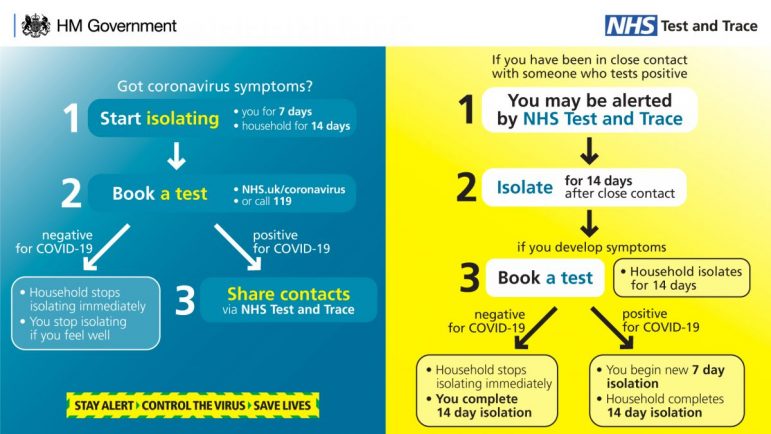
Click here for the full government workplace guidelines for NHS track and trace, which should be used in conjunction with the regularly updated working safely during coronavirus guidelines.
 Greater Exeter Skills Partnership